Regional Water Security Project
Armidale Regional Council is securing the region’s long-term water supply. The 2019 drought brought our community close to running out of water. This project is our response.
Stage 1
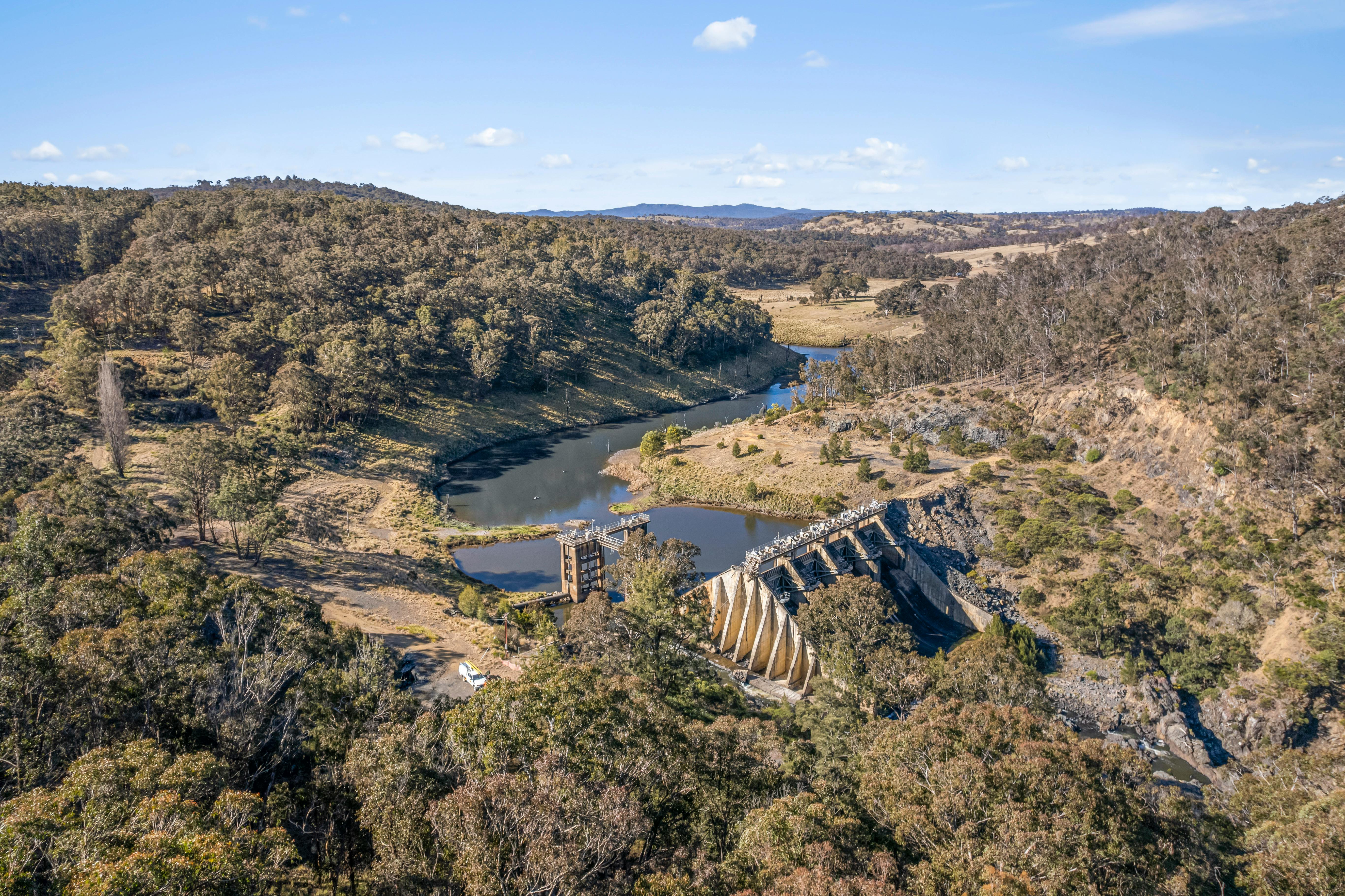
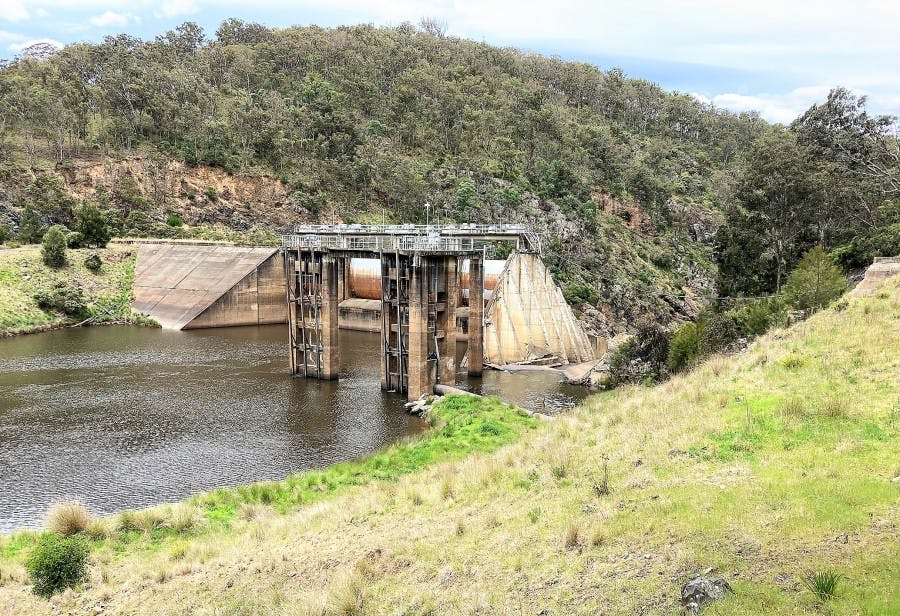
- Restoration of Oaky River Dam wall
- Constructing a 54 km pipeline to the Armidale Water Treatment Plant
- Extending a pipeline to Uralla to strengthen regional water security
Stage 2
- Raising Malpas Dam to increase long term storage
- Delivered once regional water demand growth confirms it is needed
Why Oaky before Malpas?
Oaky provides an immediate additional water supply, with a more reliable catchment. Completing Oaky River Dam first provides a second safe water source, while works are undertaken on Malpas.
Frequently Asked Questions
What has Council lodged?
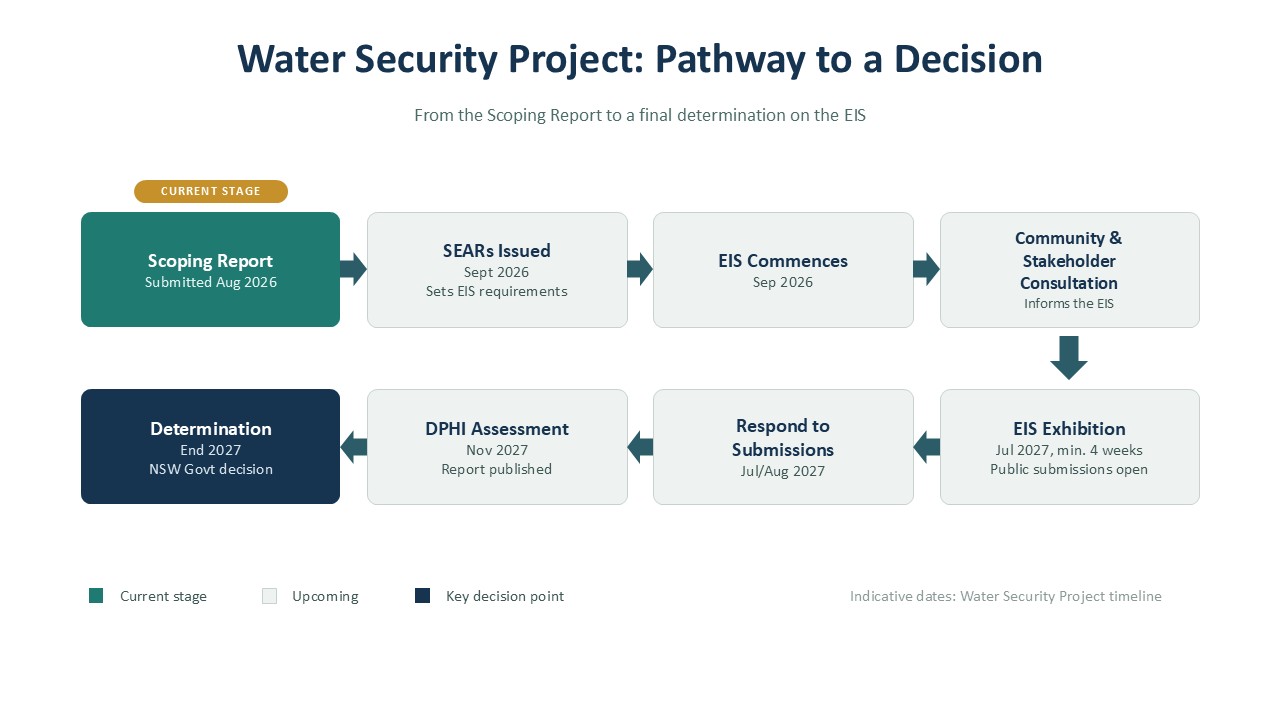
Armidale Regional Council has lodged a Scoping Report with the NSW Department of Planning, Housing and Infrastructure (DPHI). This starts environmental assessment process for the Regional Water Security Project.
Does lodging the Scoping Report mean the project is approved?
No. Lodging the Scoping Report is not an approval to build. It is the beginning of a rigorous environmental and community assessment process. DPHI will review the Scoping Report and issue state environmental assessment requirements (SEARS), setting out what Council must address in the Environmental Impact Statement (EIS). The community will have the opportunity to have their say during the preparation of the EIS. The EIS will be placed on public exhibition for a minimum of 28 days. All stakeholders will be invited to make formal submissions. Every submission will be considered before any approval decision is made by the state government.
Why is this project needed?
In 2019 Armidale experienced its driest and warmest year on record. Level 5 water restrictions were in place for 11 months from October 2019 to September 2020 and the region came close to running out of water entirely. The NSW Government has assessed the Armidale region at Category 5, the highest level of water security risk in the state. Climate projections indicate hotter, drier conditions ahead. Without action the region cannot sustain its current population, support economic growth, or meet the needs of the New England Renewable Energy Zone.
What does the project involve?
The project is staged and involves:
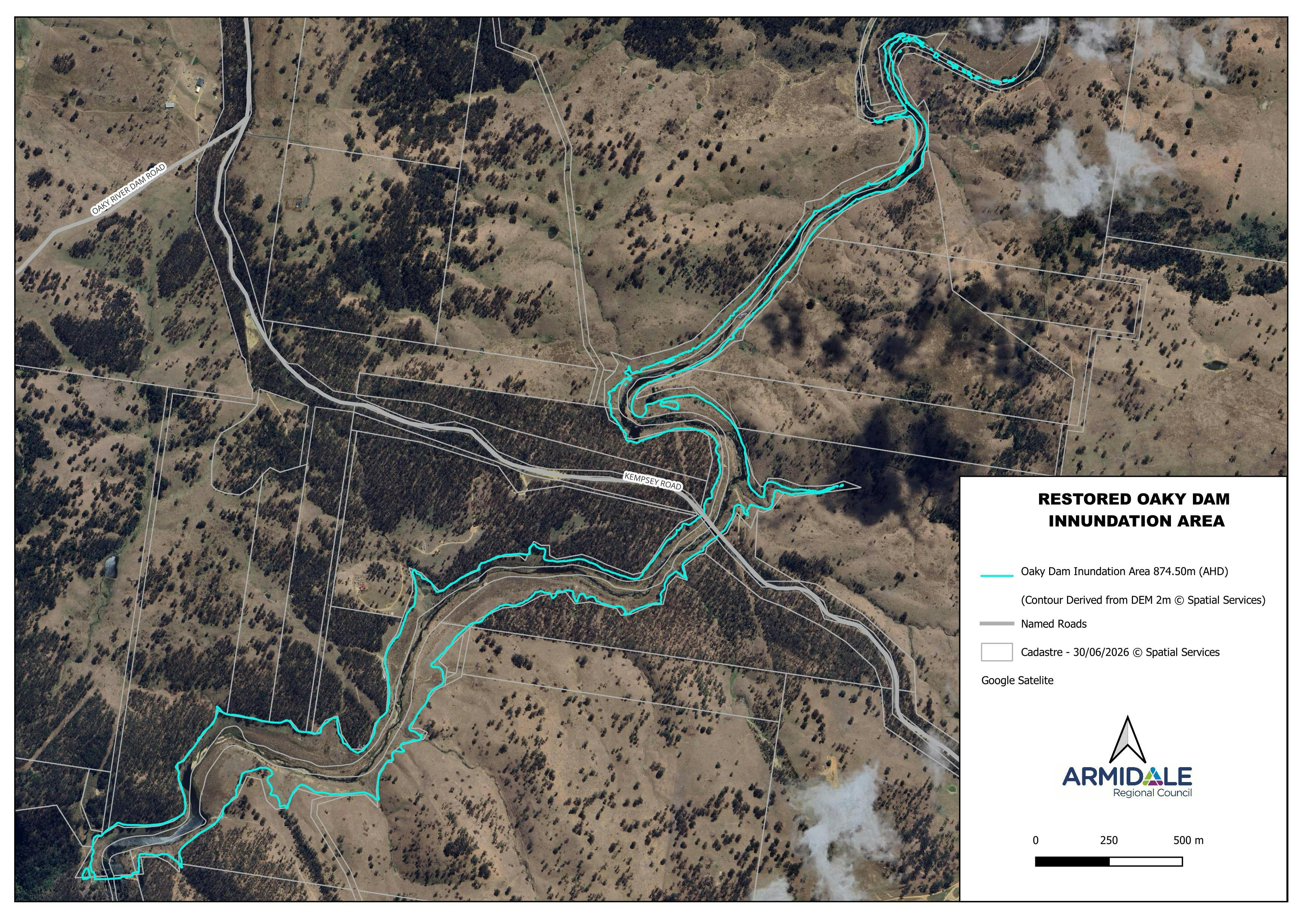
Stage 1: Restoration of Oaky River Dam to its original storage capacity, construction of a 54 km water transfer pipeline connecting Oaky River Dam to the Armidale Water Treatment Plant, and delivery of a water pipeline connecting Uralla to Armidale. Together these will give the region a second, independent water source and extend water security to Uralla.
Stage 2: Raising the Malpas Dam spillway by 6.5 metres to increase long-term storage. This will be delivered when water demand growth across the region confirms it is required.
Why does Stage 1 (Oaky River Dam) come before Stage 2 (Malpas Dam)?
Oaky provides an immediate additional water supply, with a more reliable catchment. Raising the Malpas Dam wall requires a carefully managed reduction in storage levels during construction. Without a backup supply in place, this would pose an unacceptable risk to the region's water security. Completing Oaky River Dam first provides a second safe water source capable of supplying up to 25 megalitres per day, ensuring continuity of supply while Stage 2 works are carried out.
What about Hydropower?
The existing infrastructure associated with the hydropower station appears still viable. With the restoration of the dam wall the reinstatement of hydropower station becomes an opportunity for an energy supplier in the future, as well as a potential income source for Council. The reinstatement of the hydropower station is not part of the proposal, but has been identified as a future opportunity should Council find a suitable supplier to reinstate, maintain and operate.
When is construction expected to start?
Construction of Stage 1 is anticipated to commence in mid to late 2028, subject to environmental approval and funding availability.
How much will the project cost and who is paying?
Final costs aren't confirmed yet, including for the Armidale to Uralla pipeline, as detailed design is still underway. The project has NSW Government support through the Safe and Secure Water Program, and Council is working with both the NSW and Australian Governments to secure the rest of the funding.
What will this mean for water bills?
The impact on bills hasn't been determined yet. Council is asking the community to have their say through the Regional Infrastructure Strategy: Levels of Service and Perceived Value consultation, to understand what residents value and can afford. This will help inform pricing and funding decisions as the project progresses. You can take part at yoursay.armidale.nsw.gov.au/water-consultation.
What is the funding risk and how is it being managed?
Government co-investment isn't yet locked in, and delays in securing it could affect delivery timing. Council is managing this by staging the project and engaging early with both levels of government to reduce that risk.
What is the water licensing risk and how is it being managed?
The project needs to confirm water access licences before construction can start. Council is working closely with DCCEEW Water to progress these licences alongside the environmental assessment, so this doesn't hold up delivery.
What are the environmental impacts?
As with any major infrastructure project, environmental impacts are anticipated, particularly during construction. The Environmental Impact Statement will assess impacts thoroughly and transparently, covering water, biodiversity, heritage, flooding, traffic and social impacts. The community will have the opportunity to review the findings and make formal submissions before any approval decision is made. Council is committed to minimising environmental impacts and appropriately managing those that cannot be avoided.
What happens next?
DPHI will review the Scoping Report and issue environmental assessment requirements, setting out the matters Council must address in the full Environmental Impact Statement. Council will then commission specialist studies and prepare the EIS. The EIS will be placed on public exhibition for a minimum of 28 days. The community and all stakeholders will be invited to make formal submissions. Every submission will be considered before any approval decision is made by the state government.
Will landholders along the pipeline corridor and neighbouring and downstream of the dams be contacted?
Yes. Council is contacting all directly affected landholders along the pipeline corridor and neighbouring or downstream of both dams to inform them of the project and the assessment process. No works will take place on any private property without the landholder's prior knowledge and agreement. Where access arrangements are required, landholders will be fairly compensated in accordance with NSW legislation.
Will the community be consulted?
Yes. The community will be consulted with during the drafting of the EIS, and kept informed via Water Drops. The full Environmental Impact Statement will then be placed on public exhibition for a minimum of 28 days. The community and all stakeholders will be invited to make formal submissions. Every submission will be considered before any approval decision is made by the state government.
Will does this mean for Guyra?
This project is part of the broader regional security including Guyra, Uralla and Walcha. Guyra dam is connected to Malpas dam via a pipeline. Connecting Oaky River dam to the Armidale Water Treatment Plant, will safeguard the water storage in Malpas dam and provide security for Guyra’s water supply.
What does this mean for Uralla?
Uralla faces its own water security challenges, including vulnerability to drought and water quality events affecting Kentucky Creek Dam. Uralla Shire Council has given formal support for a water pipeline connecting the Armidale system to Uralla, and this connection is now included in Stage 1 of the project. Subject to further technical, environmental and funding assessment, the pipeline would provide Uralla with a secure, reliable long term water supply and strengthen water security across the wider region.
Who is paying for the Armidale to Uralla pipeline?
Final costs for the Armidale to Uralla pipeline are not confirmed, as detailed design is still underway. Funding and cost-sharing arrangements will be settled between Armidale Regional Council and Uralla Shire Council through a formal agreement. The project has received support NSW Government through the Safe and Secure Water Program. Both councils are working with the NSW and Australian Governments to secure further funding for the project as a whole.
Will Armidale ratepayers be subsidising Uralla's water?
No. The intent is that each community pays a fair share of the cost of the infrastructure and water it receives. That is what the formal agreement between the two councils is for, and why the arrangement will be worked through and consulted with the community .
Will Uralla residents pay more for their water because of this?
The impact on water bills in either community has not been determined. Uralla residents will not be charged an arbitrary price for connecting to the Armidale system. Pricing will be set through the formal agreement between the two councils, informed by community consultation, and in line with the water pricing rules that apply to NSW local water utilities.
Why is Uralla part of this project?
Uralla faces its own water security challenges, including vulnerability to drought and water quality events affecting Kentucky Creek Dam. Uralla Shire Council has given formal support for a pipeline connecting the Armidale system to Uralla, and this connection is now included in Stage 1. Water security is a regional problem. A single integrated system across Armidale, Guyra and Uralla is more resilient and cheaper to run than each community solving the problem alone.
Will the community have a say on pricing?
Yes. Council is asking the Armidale region community what they value and what they can afford through the Regional Infrastructure Strategy: Levels of Service and Perceived Value consultation. You can take part at yoursay.armidale.nsw.gov.au/water-consultation. What we hear will inform pricing and funding decisions as the project progresses.
How can Uralla residents have their say on pricing?
Uralla residents will have their own pathway to comment on the proposed arrangement, coordinated with Uralla Shire Council. Decisions about what Uralla residents pay will not be made for them by Armidale Regional Council. Details of how and when to take part will be published on this page and by Uralla Shire Council.
When will the cost-sharing arrangement be decided, and will it be made public?
The arrangement will be worked through as part of the detailed design. Both communities will be consulted on the proposed arrangement before it is finalised, and the outcome will be published openly once resolved. Until then, no figures should be treated as settled.
What if the two councils cannot agree?
The Uralla connection is included in Stage 1 on the basis of formal support from Uralla Shire Council. If a workable cost-sharing arrangement cannot be reached, the connection would be reconsidered. That would not stop the rest of Stage 1, which restores Oaky River Dam and delivers the 54 km pipeline to the Armidale Water Treatment Plant.
What if rainfall improves and the dams fill? Does the project still proceed?
Yes. Good rainfall does not change the fundamental problem. The 2019 drought demonstrated that Malpas Dam alone cannot guarantee supply through an extended dry period. This project provides the long-term structural solution required to meet the region's water security needs regardless of short-term rainfall.
What are the broader benefits of the project?
Beyond securing the region's water supply, the project supports:
- Drought security: the community will be able to withstand extended dry periods without severe water restrictions.
- Growth: water security is the critical enabler for Armidale's ambition to reach 50,000 people.
- Renewables: the New England Renewable Energy Zone cannot proceed without a secure water supply. Peak REZ water demand is expected to exceed current supply.
- Agriculture: water security supports the region's horticulture and broader agricultural sector.
- Regional neighbours: Stage 1 includes a direct pipeline connection to Uralla, with the project also designed to support Walcha's water security over time.
- Jobs: construction will bring direct employment and economic benefits to the local community.

-

Phone 02 6770 3990 Email arcwatersecurity@armidale.nsw.gov.au -

Phone 02 6770 3990 Email arcwatersecurity@armidale.nsw.gov.au